posts

UNLAWFUL PRESENCE BARS CAN RUN IN THE US, BIA & USCIS AFFIRM

UNLAWFUL PRESENCE AND THE THREE/TEN-YEAR-BAR

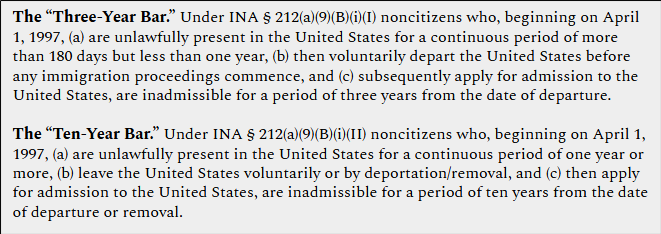
Under the unlawful presence grounds of inadmissibility, the three- and ten-year bars at INA § 212(a)(9)(B) penalize people who are present in the US. without any lawful immigration status for more than 6 months and 12 months respectively. This could be overstaying a visa by failing to depart the US. after one’s visa expires or it may be crossing the border and then remaining in the US. without any status. These bars do not apply until the person leaves the US. and then seeks to come back or to apply for admission.

Once the three or ten years have passed, the person is no longer inadmissible. In recent years, USCIS interpreted the three- and ten-year bars as only able to run if the person is outside of the United States. Thus, if the person triggered the three- or ten-year bar and then re-entered the United States before the requisite time bar had passed, they remained inadmissible, regardless of how much time passed while they were in the United States.
These bars are particularly problematic for non-citizens who entered the US. without inspection (not admitted into the US. on a visa or with parole—such as non-citizens who cross the Mexican border) since they are, in most cases, not eligible to adjust status to obtain residency (a green card) in the country. Since non-citizens who entered without inspection are not eligible to adjust status here they are required to attend an interview at the US. Consulate in their home country to obtain residency. This is where the three-year and ten-year bars become such a major obstacle for non-citizens in this situation.

For many years after the three and ten-year bars came into existence in 1998, non-citizens subject to the bars had no option but to the leave the US. and apply for a waiver outside of the country and spend years separated from their family until the I-601A provisional waiver (state-side waiver) allowed for the spouses and children of US. citizens (and later permanent residents) to apply for a waiver while still in the US. If the waiver is approved they are still required to leave the country and attend the interview at the US. Consulate in their home country but this allows them to significantly reduce the amount of time they are required to be outside of the country. The current processing time for an I-601A waiver is 34 months and then they must still go through the traditional visa process, so it takes a lot of time and effort to pursue these waivers. Those who do not have a citizen/resident parent or spouse have no way of getting around the three/ten-year bar.

NEW USCIS POLICY AND CASE LAW

New USCIS policy guidance and a recent BIA case, Matter of Duarte-Gonzalez, 28 I&N Dec. 688 (BIA 2023), however, now officially acknowledge that the simple passage of time is enough for the three- and ten-year bars to run, regardless of whether the full time period is spent inside or outside the United States.

Previously, a handful of unpublished BIA cases said the three- and ten-year bars at INA 212(a)(9)(B) could run in the United States, but with Duarte-Gonzalez we now also have a precedential BIA decision taking the same position as USCIS, that the 212(a)(9)(B) time bars can run in the United States based on the plain language of the statute. This means whether an applicant is seeking adjustment of status with USCIS or applying to adjust in immigration court (before EOIR, the Executive Office for Immigration Review), this policy applies to them.

Now, USCIS and EOIR will look at the amount of time that has passed since a person triggered the unlawful presence bar, without regard to where they were physically located

during that time. Once the requisite number of years have passed, the ground of inadmissibility no longer applies, and no unlawful presence waiver is needed to adjust status.

LIMITED BENEFIT TO THIS CHANGE

Even though USCIS and the BIA now acknowledge that the 212(a)(9)(B) time bars can run while in the United States, keep in mind a person must leave the United States to trigger one of these bars. Thus, in order for the time bar to pass in the United States, they must have somehow returned after their departure. How they returned is critical.

If you entered the US on a visitor visa in 2003 and overstayed but you triggered the ten-year bar by departing the US in 2005 with advance parole to go visit a sick relative, then when you return and are paroled into the US lawfully, you may wait out the remainder of the ten-year bar in the US. If you become eligible for residency in 2016, more than ten years after you tripped the bar, then you are no longer inadmissible under INA §212(a)(9)(B) pursuant to the new policy.

Practically this isn’t going to benefit many people. People in the situation described above would often be able to adjust status without a waiver anyway if they were married to a US citizen and traveled on parole.

Those who wouldn’t be eligible would be those who never traveled on parole and this new policy won’t benefit them. If you entered without inspection, accrued more than a year of unlawful presence and then left the US triggering the ten-year bar and then reentered the US again without inspection then this new policy will not benefit you. By reentering without inspection you would have triggered the permanent bar under INA §212(a)(9)(C).

Two types of people benefit from this policy without also having a permanent bar problem:

1) Those who re-entered the United States lawfully after a departure triggering the three or ten-year bars; or

2) Those who only triggered the three-year bar with their departure (regardless of whether they re-entered the United States lawfully or not).

MATTER OF DUARTE-GONZALEZ

Matter of Duarte-Gonzalez, 28 I&N Dec. 688 (BIA 2023)

Non-citizens who are inadmissible for a specified period of time pursuant to section 212(a)(9)(B)(i) of the Immigration and Nationality Act, 8 U.S.C. § 1182(a)(9)(B)(i), due to their previous unlawful presence and departure are not required to reside outside the United States during this period in order to subsequently overcome this ground of inadmissibility.

USCIS POLICY ALERT

USCIS Policy Alert, INA 212(a)(9)(B) Policy Manual Guidance (PA-2022-15), dated June 24, 2022, available at https://www.uscis.gov/sites/default/files/document/policy-manual-updates/20220624-INA212a9B.pdf

US Citizenship and Immigration Services (USCIS) is issuing policy guidance in the USCIS Policy Manual on inadmissibility under section 212(a)(9)(B) of the Immigration and Nationality Act (INA), specifically, the effect of returning to the United States during the statutory 3-year or 10- year period after departure or removal (if applicable).

Under this policy guidance, a non-citizen who again seeks admission more than 3 or 10 years after the relevant departure or removal,2 is not inadmissible under INA 212(a)(9)(B) even if the non-citizen returned to the United States, with or without authorization, during the statutory 3-year or 10-year period.

USCIS is issuing this guidance to explain the effect of returning to the United States during the statutory 3-year or 10-year period after departure or removal (whichever applies) on inadmissibility determinations under INA 212(a)(9)(B). This guidance contained in Volume 8 of the Policy Manual is effective immediately and applies prospectively to USCIS inadmissibility determinations made on or after June 24, 2022. The guidance contained in the Policy Manual is controlling and supersedes any prior related guidance on the topic.

In addition, some non-citizens may be eligible to file a motion to reopen8 their previously denied application with USCIS using a Notice of Appeal or Motion (Form I-290B). For more information, see the Unlawful Presence and Inadmissibility webpage.

Policy Highlights

• Explains that USCIS does not consider a non-citizen who has accrued more than 180 days of

unlawful presence and has departed or been removed (whichever applies) inadmissible under

INA 212(a)(9)(B) unless the non-citizen again seeks admission to the United States within the

statutory 3-year or 10-year period after departure or removal (whichever applies) following

accrual of the requisite period of unlawful presence.

• States that the statutory 3-year or 10-year period begins to run once the non-citizen departs or is removed (whichever applies) and continues without interruption from that date until 3 or 10 years after such departure or removal.

• States that a non-citizen’s location during the statutory 3-year or 10-year period and the

non-citizen’s manner of return to the United States during the statutory 3-year or 10-year period are irrelevant for purposes of determining inadmissibility under INA 212(a)(9)(B).

Summary of Changes

Affected Section: Volume 8 > Part O, Non-citizens Unlawfully Present

• Adds new Chapter 6 (Effect of Seeking Admission Following Accrual of Unlawful Presence).

• Adds new [Reserved] Chapters 1, 2, 3, 4, and 5.

Citation

Volume 8: Admissibility, Part O, Non-citizens Unlawfully Present, Chapter 6, Effect of Seeking Admission Following Accrual of Unlawful Presence [8 USCIS PM O.6].
Petty Offense Exception

The “petty offense exception” applied to a person with only one conviction for a crime involving moral turpitude (CIMT). Since so many offenses can be classified as crimes involving moral turpitude, many noncitizens risk being excluded even for minor convictions. Coming within the Petty Offense Exception is one way to avoid this exclusion. This exception excuses inadmissibility, but not deportability, on account of a conviction of, or admission of committing, one crime of moral turpitude. It does not excuse any other ground of inadmissibility, such as a drug conviction.

The person must meet the following criteria under INA § 212(a)(2)(A)(ii)(II):

  • The person only committed one crime involving moral turpitude (ever);
  • The person must not have been “sentenced to a term of imprisonment in excess of six months”
    (sentenced defined as time ordered to be served in jail or prison and not on probation); and
  • The offense must have a maximum possible sentence of one year.

Commission of Only One CMT

If the government shows, by a preponderance of the evidence, that a noncitizen has committed a second CMT, s/he will no longer be eligible for the petty offense exception to inadmissibility. Counsel should check the defendant’s entire criminal record to make sure that s/he has committed only one crime involving moral turpitude.  Commission of a second moral turpitude offense, even if the conviction was expunged, or charges were dismissed and there was no second conviction at all, will disqualify the defendant from eligibility for the Petty Offense Exception to inadmissibility for one CMT.  On the other hand, previous non-turpitude convictions (e.g., driving under the influence, simple assault) will not disqualify the defendant from receiving the Petty Offense Exception.

A court finding that a defendant violated a condition of probation does not constitute a conviction, and therefore does not establish that the defendant committed a second CMT for purposes of disqualifying him or her from the petty offense exception to inadmissibility.  However, if the conduct underlying the violation of probation constitutes CMT conduct (i.e., the commission of a second CMT), the conduct could disqualify a noncitizen from the Petty Offense Exception. Counsel should examine the petition filed in the criminal court alleging a violation of probation, and any attached documents such as police reports, and determine the nature of the conduct resulting in the allegation that the defendant violated probation.

The question of whether a noncitizen has committed a second CMT is a conduct-based factor, and the noncitizen is free to contest it as a factual matter.  The client could testify in removal proceedings they did not commit the second CMT, or call other witnesses to prove this.

For example, in the context of determining whether a noncitizen on supervised release from immigration detention had violated the term of the release requiring that he not “commit any crimes, “ the Ninth Circuit has held that a plea of no contest in criminal proceedings is insufficient evidence to show that the noncitizen has committed a crime, since a nolo contendere plea is not an admission of guilt to the underlying crime. Applied in this context, counsel can argue that a no contest plea cannot be used to establish that a noncitizen has “committed” another CMT, because even though there is a conviction, a no contest plea gives no proof that the offense of conviction was “committed” by the defendant. Other evidence, however, could be used to prove the conduct.

Counsel can also argue (similarly to the single scheme concept applied to the two or more CMT ground of deportability) that a second CMT committed as part of the same criminal act does not disqualify a person from the Petty Offense Exception.

Sentence Imposed of Six Months or Less

The immigrant will qualify for the Petty Offense Exception if s/he obtains a sentence imposed of six months or less, or suspended imposition of sentence with six months or less jail time as a condition of probation.  This requirement is violated by a court-ordered sentence in excess of six months, even if the person does not actually serve a sentence in excess of six months.[9]  Note, however, that the definition of “sentenced to imprisonment in excess of six months” is technical.  See, generally, Criminal Defense of Immigrants Chapter 10, supra.  For example, if a term of imprisonment in excess of six months is imposed, suspended execution of that sentence does not prevent the entire sentence (including the portion as to which execution was suspended) from being counted as a sentence for this purpose, disqualifying the noncitizen from eligibility for the Petty Offense Exception.

The actual sentence imposed by the court determines whether the person meets this requirement for the Petty Offense Exception, even if the conviction occurred in a foreign country.

A prison term “in excess of six months” is generally assumed to mean a term in excess of 180 days.  Counsel can argue, however, that a sentence imposed of 182 days would not disqualify a person from the Petty Theft Offense Exception, since a year consists of 365 days, and half a year (i.e., six months), would therefore consist of 182.5 days.

Maximum Possible Sentence of One Year

The Petty Offense Exception also requires that the maximum sentence of imprisonment that could have been imposed be one year or less; a greater maximum is a disqualifier. For offenses committed in the United States, the criminal statute that establishes the maximum allowable time in custody for the crime of which the defendant was convicted determines whether this requirement is met.

If the conviction is for a misdemeanor rather than a felony, the Petty Offense Exception can apply, assuming the misdemeanor is punishable by a maximum of one year or less in custody.  Some states’ statutory schemes differ, however, so the particular state statute establishing the maximum for the offense of conviction must be consulted to determine whether the maximum possible sentence for the misdemeanor is one year or less in custody. Similarly, in some states, the maximum custody for some felonies is one year or less.  Where this is so, the felony CMT does not disqualify the noncitizen from eligibility for the Petty Offense Exception.  This requirement depends on the maximum, not the felony or misdemeanor label of the offense.

If the offense could be either a felony or a misdemeanor, and the initial conviction is for a felony, the immigrant may be able in some states, such as Arizona and California,  to obtain reduction from a felony to a misdemeanor. Because the immigration authorities are bound by the most recent sentence ordered, they must give effect to a state court reduction of the offense from a felony to a misdemeanor, and the conviction will thereby fall within the one-year maximum sentence requirement of the Petty Offense Exception, if the new misdemeanor maximum is one year or less.

Effective Date Issues

Effective Date of Current Petty Offense Exception

The current definition of the Petty Offense Exception applies only to individuals entering the United States on or after June 1, 1991. Individuals who entered prior to that date are subject to the former terms of the Petty Offense Exception, which did not contain the requirement of a one-year maximum possible sentence.

Therefore, a noncitizen convicted of a felony with a maximum greater than one year, who entered the United States before this effective date, would not have been inadmissible at entry if the CMT conviction otherwise qualified for the Petty Offense Exception, and would therefore not be deportable for being inadmissible at entry.Second, the stop-time rule for cancellation of removal would not have been triggered by such a felony conviction as to an entry prior to this effective date.  See § 3.6, infra.

Date of Determination of Admissibility  

The determination of whether the person qualifies for the Petty Offense Exception is made under the law as it existed at the time entry was sought, rather than under the law at the time the criminal acts or conviction occurred. A returning resident, however, who was paroled into the United States because of pending criminal charges, and who was later convicted of a crime involving moral turpitude, was excludable on the basis of the conviction.  If a United States citizen was convicted of an offense that triggers inadmissibility, and then later expatriated, s/he was at that point excludable because they were a noncitizen with an excludable conviction at the time s/he attempted to enter the United States.

Immigration Consequences of Petty Offense Exception

The primary use of the Petty Offense Exception is to excuse inadmissibility on account of a conviction of, or admission of committing, one crime involving moral turpitude. The exception does not excuse inadmissibility on account of a drug conviction.  The statute defining the Petty Offense Exception does not distinguish between admissions (of a crime or of acts which would form the elements of a crime) and actual convictions and so defeats inadmissibility in both cases.  The Petty Offense Exception also defeats a ground of deportability in which the DHS charges the respondent with having been inadmissible at the time of admission for having committed a crime involving moral turpitude.  In addition, a conviction coming within the Petty Offense Exception cannot be used to preclude a showing of Good Moral Character for purposes of voluntary departure. A conviction coming within the Petty Offense Exception also will not stop the clock for cancellation of removal applicants.

Qualifying For the Petty Offense Exception

The immigrant generally has the burden of showing he or she qualifies for the Petty Offense Exception.  To do this, it is necessary to obtain certified copies of the criminal court records proving the offense of conviction and the sentence imposed by the court.  It is also necessary to obtain a copy of the criminal statute defining the crime and setting forth  the maximum possible sentence to confinement on the exact date on which the offense was committed.  Finally, it may be useful to obtain a copy of the criminal history to show that the person had never committed a second CMT offense at any time.

It may also be useful to obtain an opinion letter from an attorney showing how these records prove the client qualifies for the Petty Offense Exception.

IN REMOVAL PROCEEDINGS

The petty offense exception does not always make you eligible for cancellation of removal for non-permanent residence (42b cancellation).

Matter of CORTEZ, 25 I&N Dec. 301 (BIA 2010)

An alien who has been convicted of a crime involving moral turpitude for which a sentence of a year or longer may be imposed has been convicted of an offense “described under” section 237(a)(2) of the Act, 8 U.S.C. § 1227(a)(2) (2006), and is therefore ineligible for cancellation of removal under section 240A(b)(1)(C) of the Act, 8 U.S.C. § 1229b(b)(1)(C) (2006), regardless of the alien’s eligibility for the petty offense exception under section 212(a)(2)(A)(ii)(II) of the Act, 8 U.S.C. § 1182(a)(2)(A)(ii)(II) (2006). Matter of Almanza, 24 I&N Dec. 771 (BIA 2009), clarified. Matter of Gonzalez-Zoquiapan, 24 I&N Dec. 549 (BIA 2008); Matter of Gonzalez-Silva, 24 I&N Dec. 218 (BIA 2007); and Matter of Garcia-Hernandez, 23 I&N Dec. 590 (BIA 2003).

Resources

For additional information, see N. Tooby, J. Rollin & J. Foster, Crimes of Moral Turpitude § 4.5 (2008); N. Tooby & J. Rollin, Criminal Defense of Immigrants § 20.29 (2007); Rosenberg, No Heartbreaker This Time: Petty Offense Rulings Favor Applicants, 8 Bender’s Imm. Bull. 960 (June 1, 2003).

False Claim to U.S. Citizenship

Inadmissible and deportable for making a false claim to U.S. citizenship. INA § 212(a)(6)(C)(ii); INA §237(a)(3)(D).

A person who falsely represents or has falsely represented themselves to be a U.S.
citizen for any purpose or benefit under the INA or any other federal or state law is inadmissible and
deportable Therefore, as written, DHS could apply these provisions to a broad range of scenarios,
including someone who is underage and uses the U.S. passport of an older friend to get into a bar and
have a drink, someone who votes in an election not realizing that they are not permitted to vote, or
someone who falsely claims to be a citizen in filling out an I-9 to get employment. There is a limited
and narrow statutory exception for certain children of U.S. citizens.

INA § 212(a)(6)(C); INA § 237(a)(3)(D).
INA § 212(a)(6)(C)(ii)(II); INA § 237(a)(3)(D)(ii)

Passport Style Photos For USCIS

WHAT ARE THE REQUIREMENTS FOR THE “PASSPORT STYLE PHOTOGRAPHS” THAT USCIS REQUIRES WITH CERTAIN APPLICATIONS AND VISA PETITIONS?

USCIS requires that you provide photographs of yourself with your visa petition or with certain immigration benefit applications (asylum, adjustment of status, employment authorization, and others). Below are USCIS’ requirements for the “passport-style photographs” that must be sent with petitions/applications that require photos. These photos are required for the DV lottery (diversity visa lottery), Adjustment of Status (green card) Application, all visa applications, U.S. passports, and other immigration benefits.

There are actually a surprising number of memos, directives, and other guidance from USCIS and the U.S. Department of State detailing strict requirements for these photos even though they don’t explain it at all anywhere in the form instructions or on their website. The State Department even offers an online tool for cropping your passport style photos at https://tsg.phototool.state.gov/photo. They have specific instructions for infants as well.

According to the guidelines from the State Department:

Your photos must be

  • In color
  • 2″x 2″ Two inch by two inch in size
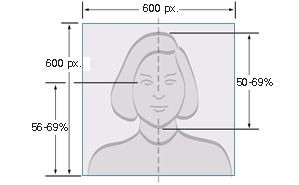
  • Sized such that the head is between 1 inch and 1 3/8 inches (22 mm and 35 mm) or 50% and 69% of the image’s total height from the bottom of the chin to the top of the head. View the Photo Composition Template for more size requirement details.
  • Taken within the last 6 months to reflect your current appearance
  • Taken in front of a plain white or off-white background
  • Taken in full-face view directly facing the camera
  • With a neutral facial expression and both eyes open
  • Taken in clothing that you normally wear on a daily basis
  • Uniforms should not be worn in your photo, except religious clothing that is worn daily.
  • Do not wear a hat or head covering that obscures the hair or hairline, unless worn daily for a religious purpose. Your full face must be visible, and the head covering must not cast any shadows on your face.
  • Headphones, wireless hands-free devices, or similar items are not acceptable in your photo.
  • Eyeglasses are no longer allowed in new visa photos, except in rare circumstances when eyeglasses cannot be removed for medical reasons; e.g., the applicant has recently had ocular surgery and the eyeglasses are necessary to protect the applicant’s eyes. A medical statement signed by a medical professional/health practitioner must be provided in these cases. If the eyeglasses are accepted for medical reasons:
    • The frames of the eyeglasses must not cover the eye(s).
    • There must not be glare on eyeglasses that obscures the eye(s).
    • There must not be shadows or refraction from the eyeglasses that obscures the eye(s). 
  • If you normally wear a hearing device or similar articles, they may be worn in your photo.

Snapshots, magazine photos, low quality vending machine or mobile phone photos, and full-length photographs are not acceptable.

You can go to most chain drug stores and get these photos done in five minutes for about ten dollars, which is what I would recommend doing. There are also many professional services that offer various systems for doing these for you. Finally, more and more people are starting to just do it themselves which is why the State Department created a tool to help people with that.

For all the details about the requirements for photographs submitted with visa petitions and application for immigration benefits see our Immigration Benefit/Visa Petition Photo Page on the topic.

HOW TO SUBMIT THE REQUIRED PHOTOGRAPH OF YOURSELF TO IMMIGRATION WITH YOUR APPLICATION OR PETITION

You can read all the boring details here otherwise see the important highlights below.

Online Visa/Passport Photo Services

U.S. Government Online Photo Tool

The U.S. Government provides this photo tool free of charge. You can take the photo of yourself and then upload your photo and use the tool to crop and resize your image to the proper dimensions (600x600px).

TIPS FOR TAKING YOUR OWN PHOTO

  • You should be able to see some of the white background above the top of your head down to just above your chest
  • have someone else take the photo don’t try to submit a selfie
  • Head is in the center of the frame
  • solid white background
  • stand 3-6 feet away from the white wall and avoid using flash so you don’t cast a shadow on the wall behind you
  • Keep a neutral face expression looking at the camera straight on
  • Don’t wear glasses or a hat or any sort of uniform
  • Use the DOS photo tool (https://tsg.phototool.state.gov/photo)to upload the photo straight from your phone and crop it to exactly 600×600 pixels (minimum resolution required)
  • You don’t need to use a ruler and measure out the exact dimensions-just make your photo look like the examples.

You can find templates for cropping and printing your photo for USCIS on our immigration photo requirements page along with more examples and information.

INFORMATION & RESOURCES

INFORMATION

& RESOURCES

Immigration Court

Immigration Appeals

VISAS & CITIZENSHIP

Helpful Links

Templates & Samples


WebEx Court Links


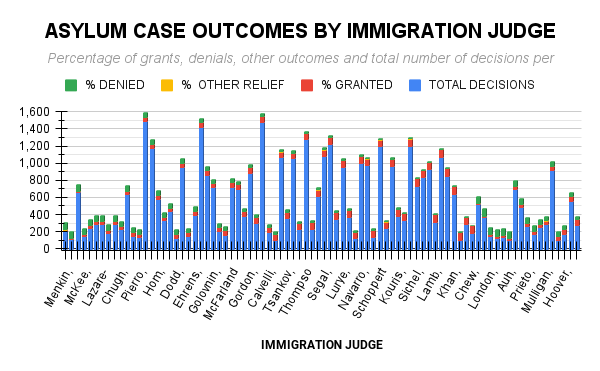
Immigration Judge Stats

Immigration Judge approval rates and statistics for the NY Immigration Courts.


Read Here

“A geopolitical border is a grotesquely arbitrary reason to prevent people from dealing with each other in whatever peaceful ways they choose.”

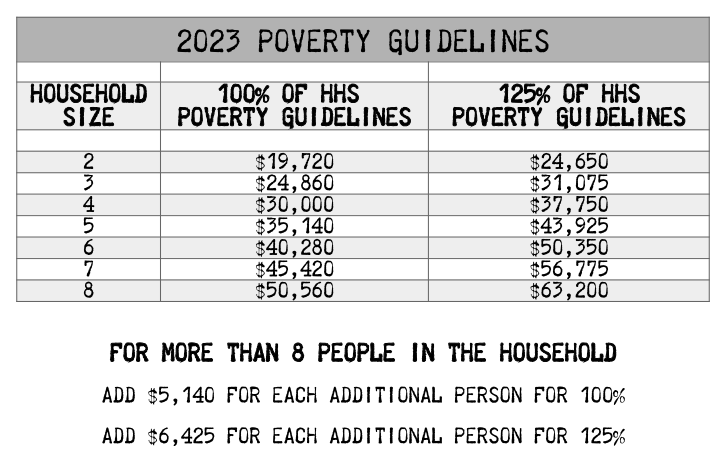
Poverty Guidelines

The poverty guidelines show how much income you must be able to show on an affidavit of support to petition for a family member to get a visa.


Learn More

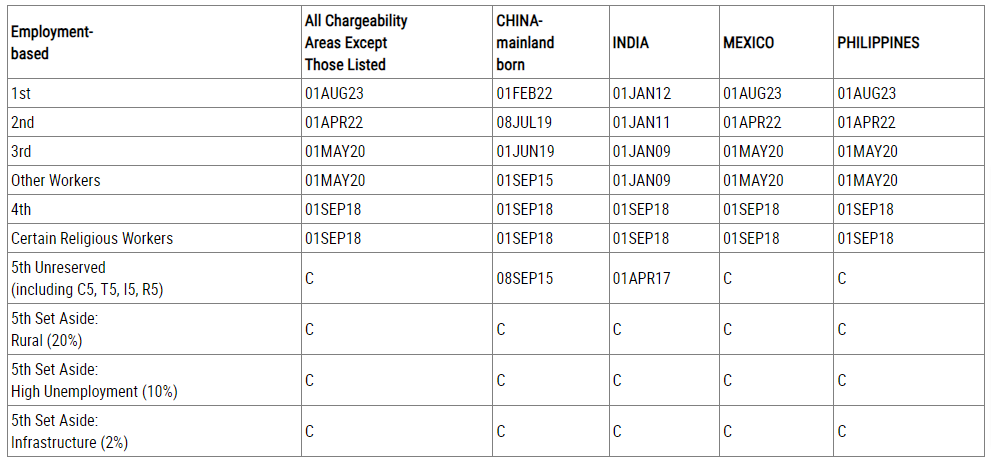
VISA Bulletin

How to access and read the monthly visa bulletin to determine if your visa is available.


Click Here

“In this nation of immigrants and their descendants, we have become so obsessed with rooting out, locking up and packing off those whom we decide should not be permitted to remain among us that we are in danger of losing a moral center of gravity.”

In A

FREE

Society

people

AND

IDEAS

MUST BE ABLE TO

CROSS

BORDERS

Free markets and open borders
are a recipe for prosperity


OPEN BORDERS OPEN BORDERS OPEN BORDERS OPEN BORDERS OPEN BORDERS OPEN BORDERS open borders

U.S. Citizens Told To Leave Belarus Immediately

  • : August 23, 2023
  • :Joseph Caraccio
  • :News
  • :BIDENNews
  • no comments yet

U.S. Citizens Told To Leave Belarus Immediately

The Biden administration is urging U.S. citizens in Belarus to depart the country immediately and warned against travel there in a statement published Monday.

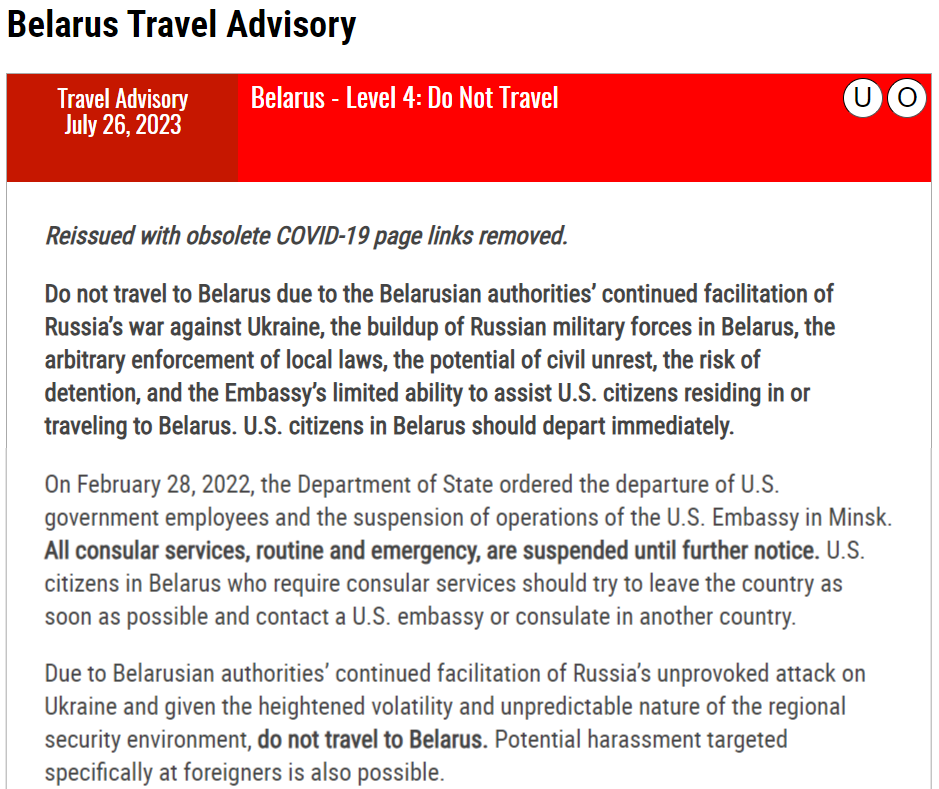
Department of State, Belarus Travel Advisory, Do Not Travel to Belarus.
Dept. of State Travel Advisory for Belarus issued July 26, 2023

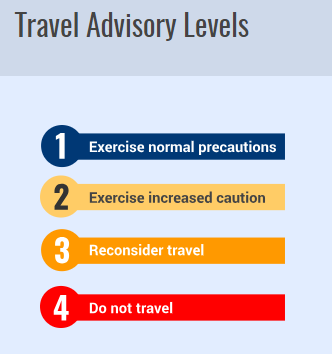
The State Department issued a Level 4 travel warning for Belarus, the highest security alert, urging Americans to leave the country immediately. This decision comes as neighboring countries Lithuania, Latvia, and Poland have heightened security along their borders due to concerns about Russian Wagner forces present in Belarus. Belarusian leader Alexander Lukashenko, known as Europe’s last dictator, has faced accusations of human rights abuses and political repression.

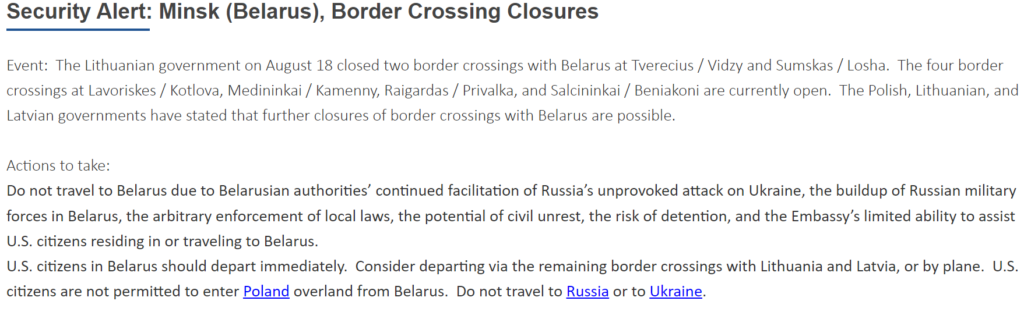
The U.S. presence in Belarus is currently limited to handling emergency services for American citizens. NATO-member countries are worried about Lukashenko’s collaboration with Putin and the potential implications for regional stability. Lithuania has already closed two border crossings with Belarus, and further closures are possible, according to the Polish, Lithuanian, and Latvian governments. Poland and Latvia have also increased their troops at the border.

Specifically the State Department states, “Do not travel to Belarus due to Belarusian authorities’ continued facilitation of Russia’s unprovoked attack on Ukraine, the buildup of Russian military forces in Belarus, the arbitrary enforcement of local laws, the potential of civil unrest, the risk of detention, and the Embassy’s limited ability to assist U.S. citizens residing in or traveling to Belarus,” 


Security Alert for Belarus Issued August 21, 2023 on the OSAC website

The State Department notes in their Do Not Travel Advisory that Belarus enforces special restrictions on dual U.S.-Belarusian nationals and may refuse to acknowledge dual U.S.-Belarusian nationals’ U.S. citizenship, including denying or delaying U.S. consular assistance to detained dual nationals.

If you decide to travel to Belarus: 


      • Have a contingency plan in place that does not rely on U.S. government assistance. Review the Traveler’s Checklist.

    No Comments on U.S. Citizens Told To Leave Belarus Immediately

    Leave A Comment

    Logged in as newyorkvisalawyer_o0id8f. Log out »

    Previous Post
    Hit enter to search or click X to close

    Search Posts

    New York Visa Lawyer

    New York Visa Lawyer